
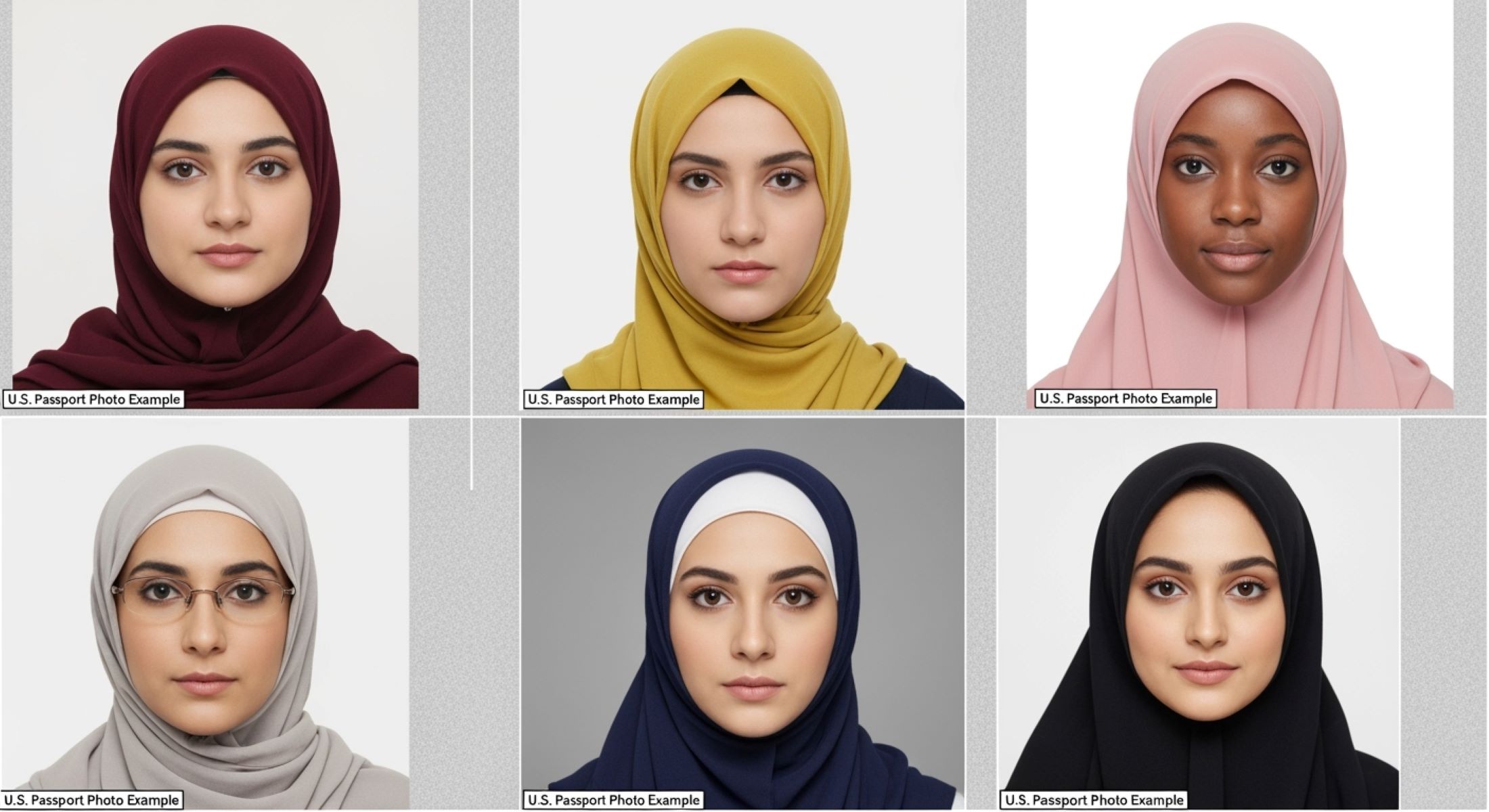
When it comes to applying for a U.S. passport, one of the trickiest parts can be the photo. For hijab wearers, the rules can feel confusing, and the fear of being turned away at the passport office is real. But don’t worry — we’ve got you covered. Let’s dive into the rules, practical examples, and tips to make sure your passport photo is accepted the first time.
Understanding U.S. Passport Photo Requirements
Before considering any specific considerations for hijab wearers, it’s important to understand the general requirements for U.S. passport photos. The U.S. Department of State has very specific standards designed to ensure that the photo accurately represents your appearance and can be reliably used for identification purposes. Passport photos are not just snapshots; they are official documents that must meet precise specifications for size, composition, and clarity. This ensures that facial recognition systems, border control officers, and other authorities can clearly identify the passport holder without confusion.
One of the most critical aspects of the photo is its size and framing. The required dimensions are exactly 2 x 2 inches (51 x 51 mm), with the head occupying 50–69% of the photo’s height. The head must be centered in the frame, and the face must be fully visible from the bottom of the chin to the top of the forehead. Any deviation from these measurements, such as tilting the head, cropping too closely, or including excess space above the head, can result in the photo being rejected. In addition, the eyes should be level and clearly visible, as this is essential for identification.
Another key requirement involves facial expression and visibility. Applicants are expected to maintain a neutral expression, with both eyes open and mouth closed. Smiling, frowning, or exaggerated expressions are discouraged, as they can distort facial features. Lighting must be even and bright enough to avoid shadows, glare, or red-eye, which can obscure facial details. Similarly, the background must be plain white or off-white, without any patterns, textures, or objects, so that the face stands out clearly in the image.
Finally, clothing and appearance are also regulated to some extent. Everyday attire is recommended, and uniforms or camouflage clothing are strictly prohibited unless for religious purposes. While head coverings for religious reasons are allowed, the face must remain fully visible. This means that the bottom of the chin, the entire forehead, and both edges of the face must be unobstructed. Accessories like sunglasses or large hats are not permitted, and any jewelry or items that cast shadows on the face should be avoided. Understanding and adhering to these detailed requirements ensures that your passport photo will be accepted the first time, saving you time, money, and unnecessary stress.
Hijab Guidelines for U.S. Passport Photos
- Religious head coverings are permitted by the U.S. passport office as long as they do not obscure the face in any way. This means the entire face, including the forehead, eyes, nose, mouth, and chin, must be fully visible. The headscarf should be worn in a way that frames the face clearly, almost like it is part of your outfit rather than a mask, ensuring that identification is straightforward and unambiguous.
- The way the hijab is styled or draped plays a significant role in the acceptance of your passport photo. It is essential to ensure that no part of the fabric casts shadows on your face, as shadows can obscure key facial features. Thick or overly voluminous styles that cover portions of the jawline, cheeks, or sides of the face should be avoided. The goal is a completely unobstructed view of the face, allowing passport authorities to clearly identify the individual in the photo without ambiguity or delay.
- Consistency with your daily appearance is critical. Passport photos are meant to represent how you generally look in public, so if you wear a hijab every day, you should wear it in the same style for your passport photo. Avoid using dramatic or unusual styles that differ from your regular look, as this could cause issues during verification or travel. The objective is to ensure that your passport photo is an accurate reflection of your typical appearance.
- Lighting and positioning are also vital considerations when wearing a hijab for passport photos. The face should be evenly lit from the front, avoiding strong shadows or harsh lighting, which can create distortions. Your head should be centered, and your eyes should look directly into the camera. Even subtle tilts of the head or uneven lighting can affect facial recognition, making adherence to these rules essential for successful submission.
- Accessories and additional clothing items should be minimal and non-obstructive. Large pins, brooches, or decorative elements on the hijab that might cover the edges of the face or create reflections should be avoided. Similarly, sunglasses, tinted lenses, or heavy makeup that alters the natural appearance of the face are not permitted. The goal is to present a clear, natural, and identifiable image that meets all U.S. passport requirements.
- The color and fabric of the hijab can also influence the clarity of the photograph. While there is no restriction on color, solid and darker shades often provide better contrast against a plain white or off-white background, making the face stand out more clearly. Lightweight fabrics that sit flat against the head without creating folds or draping over the facial edges are ideal for a professional-looking passport photo.
- Finally, it is helpful to take multiple trial photos before submitting your passport application. This allows you to experiment with different styles, lighting conditions, and angles to ensure that the face is fully visible, well-lit, and clearly framed. Reviewing several options helps avoid mistakes and increases the likelihood that your passport photo will be accepted on the first submission, saving time and avoiding unnecessary resubmissions.
Step-By-Step Guide to Taking a Hijab-Friendly Passport Photo
| Step | What to Do | Why It Matters | Common Mistakes | Pro Tips |
| Background | Choose a plain, neutral background, ideally white or off-white | Ensures the face stands out clearly and meets U.S. passport standards | Using patterned walls or cluttered backgrounds | Stand 3–5 feet away from the background to reduce shadows |
| Hijab Adjustment | Arrange the hijab neatly so all facial features are visible | Prevents any part of the face from being obscured, ensuring compliance | Loose draping over the chin or cheeks | Use lightweight fabric and tuck edges close to the face for clarity |
| Lighting | Use even, soft lighting; natural light is ideal | Avoids shadows or harsh glare that can hide facial details | Harsh overhead light or side shadows | Take the photo near a window or use diffused lighting for balanced exposure |
| Head Position | Center your face, keep your head straight, eyes level | Ensures the photo matches passport size and framing requirements | Tilting the head or leaning forward/back | Stand or sit at eye level with the camera to maintain symmetry |
| Facial Expression | Maintain a neutral expression; gentle closed-mouth smile is acceptable | Passport photos require a consistent, recognizable appearance | Smiling too broadly or frowning | Relax your face, take a deep breath, and focus on a calm, neutral look |
| Framing | Ensure the head covers 50–69% of the photo height | Meets official passport size regulations | Cropping too closely or leaving too much space above the head | Use a grid or marker on your camera/phone to check proportions |
| Photo Selection | Take multiple shots and review carefully | Increases the chance of choosing the clearest, most compliant photo | Submitting the first photo without review | Compare several images, check for shadows, clarity, and alignment |
Common Mistakes Hijab Wearers Make in Passport Photos
Even with clear guidelines, many hijab wearers make mistakes when taking passport photos that can lead to rejection. One of the most frequent issues is covering the forehead or chin. Passport regulations require that the entire face—from the bottom of the chin to the top of the forehead—be fully visible. When the hijab is draped too low over the forehead or tucked too tightly under the chin, it can obscure these critical areas, causing officials to reject the photo. To avoid this, it’s important to adjust the hijab carefully, ensuring all facial edges are fully visible while still maintaining a natural and comfortable look.
Another common problem is shadows on the face. Shadows can hide key facial features, making the photo non-compliant with U.S. passport standards. Harsh lighting, uneven positioning relative to light sources, or folds in the hijab can all create unwanted shadows. The solution is to use soft, even lighting, preferably natural light, and to check the photo carefully before submission. Standing facing a window or using a soft lamp can dramatically reduce shadows and make facial features clear.
Many applicants also struggle with large accessories or pins on their hijabs. Decorative elements, oversized pins, or clips can interfere with facial recognition and create distortions in the photo. Passport photos are intended to capture a clear, unobstructed image of the face, so it’s best to use small, simple pins or none at all. Minimizing additional accessories ensures that the focus remains on the face, avoiding delays or rejection during the passport application process.
Finally, inconsistency with everyday hijab style and background distractions are frequent pitfalls. Wearing a dramatically different hijab style than usual can make the passport photo unrepresentative of your typical appearance, which may cause problems during verification. Similarly, using a non-plain or patterned background can distract from the face and reduce photo clarity. The best approach is to wear your everyday hijab style and use a plain white or light-colored wall as the backdrop, ensuring that the photo meets all official standards and accurately represents your appearance.
Examples of Acceptable Hijab Passport Photos
- A plain black hijab with the edges neatly tucked around the face, ensuring that all facial features including the forehead, chin, and cheeks are fully visible. The background is a solid white, and the lighting is even, with no shadows on the face. This style is fully compliant with U.S. passport rules and is accepted because it clearly shows the applicant’s natural appearance without any obstruction.
- A solid-colored hijab in a neutral tone, wrapped snugly around the head, with no fabric covering the jawline or forehead. The face is centered, eyes are level, and the expression is neutral. Even if the background is slightly off-white, the contrast with the hijab ensures the face stands out clearly. This style is also accepted and meets all the Department of State requirements for clarity, framing, and facial visibility.
- Everyday hijab style that the applicant normally wears in public, with edges neatly arranged and a small, unobtrusive pin used to secure it. A light shadow may appear on the neck or shoulder, but the face remains fully visible with proper lighting. This is considered acceptable because it reflects the applicant’s consistent appearance and does not obscure any facial features.
- A dark-colored hijab made of lightweight fabric, pulled back just enough to fully expose the forehead, ears, and chin. The face is centered in the photo, covering approximately 50–69% of the frame, and the background is a plain white wall. This type of photo is accepted because it balances modesty with clarity, meeting all official guidelines for passport photos.
- A patterned hijab with minimal design, worn tightly around the head so that it frames the face clearly, leaving all edges visible. There are no heavy folds or draping over the jawline, and the eyes, nose, and mouth are unobstructed. The expression is neutral, and the lighting is even, making it an acceptable option for passport submission despite the slight pattern in the fabric.
Do’s and Don’ts for Hijab Passport Photos
| Category | Action | Reason | Common Mistakes | Pro Tips |
| Do | Wear your hijab as you normally do | Reflects your daily appearance and ensures consistency for identification | Using a dramatically different style than usual | Choose the style you wear in public every day to avoid discrepancies |
| Do | Ensure full facial visibility | Prevents rejection by showing all required facial features | Covering forehead, chin, or jawline | Adjust hijab edges carefully so all facial edges are visible |
| Do | Use a plain background | Keeps the focus on your face and meets official passport requirements | Patterned walls, busy backgrounds | Use white or off-white walls; stand 3–5 feet away from the background to reduce shadows |
| Do | Keep a neutral facial expression | Ensures the photo is compliant and recognizable | Smiling too broadly, frowning, or exaggerated expressions | Relax your face, maintain a calm expression, lips closed or a subtle smile |
| Do | Check lighting for shadows | Clear lighting avoids obscuring facial features | Shadows on face from overhead light or folds in hijab | Use soft natural light from a window or diffuse indoor lighting for even illumination |
| Don’t | Cover your forehead, eyebrows, or chin | Facial features must be fully visible to meet passport standards | Draping hijab too low over the forehead or under the chin | Make small adjustments to expose all edges of your face clearly |
| Don’t | Add decorative pins that obscure the face | Pins can block parts of the face or create glare | Large brooches, shiny accessories, or heavy pins | Use small, unobtrusive pins or avoid them altogether |
| Don’t | Wear sunglasses or tinted glasses | Eyes must be fully visible for identification | Dark lenses, reflective sunglasses | Remove all eyewear before taking the photo |
| Don’t | Drastically change hijab style from daily wear | Ensures the passport photo represents your regular appearance | Using an elaborate or unusual style just for the photo | Stick to your everyday, consistent hijab style to avoid confusion |
Special Cases: Medical or Safety Exceptions
While most passport photo rules are straightforward, certain special cases can arise when head coverings intersect with medical or safety needs. For instance, individuals recovering from facial or cranial surgery may need to wear bandages, head wraps, or other protective coverings that partially obscure traditional head and hair lines. Similarly, people with sensitive skin conditions might require soft or protective fabrics that slightly alter how a hijab is worn. In these situations, the U.S. passport office recognizes the need for flexibility, but the fundamental rule still applies: the face must remain clearly visible from the bottom of the chin to the top of the forehead, and all facial edges must be unobstructed.
Another category includes individuals who have specific religious or cultural practices requiring additional coverage beyond the typical hijab style. While these coverings are permitted, passport authorities will evaluate whether the face is sufficiently visible to allow identification. In many cases, small adjustments can be made to meet both religious requirements and the official photo standards. For example, carefully repositioning the fabric or using a lighter material can maintain modesty while keeping the face fully exposed. Clear communication with the passport office about such requirements is highly recommended to avoid rejection or delays.
Applicants in these special cases should also be mindful of lighting and shadow considerations. Even minor shadows caused by medical wraps, protective coverings, or layered fabrics can obscure facial features, leading to potential rejection. Ensuring even, natural lighting and checking the photo for clarity before submission is essential. It is often helpful to take multiple trial photos, experimenting with slight adjustments to both the head covering and light placement to achieve a compliant image.
Finally, it’s crucial to notify the passport office of any special circumstances prior to submitting the photo. Providing context about medical conditions or religious requirements can help the staff make informed decisions and accept minor modifications that still meet identification standards. Proper documentation or a brief explanation can prevent unnecessary delays and ensure that your passport application proceeds smoothly. By planning ahead and adhering to these considerations, even those with special medical or safety needs can successfully submit a compliant passport photo.
Leave a Reply